

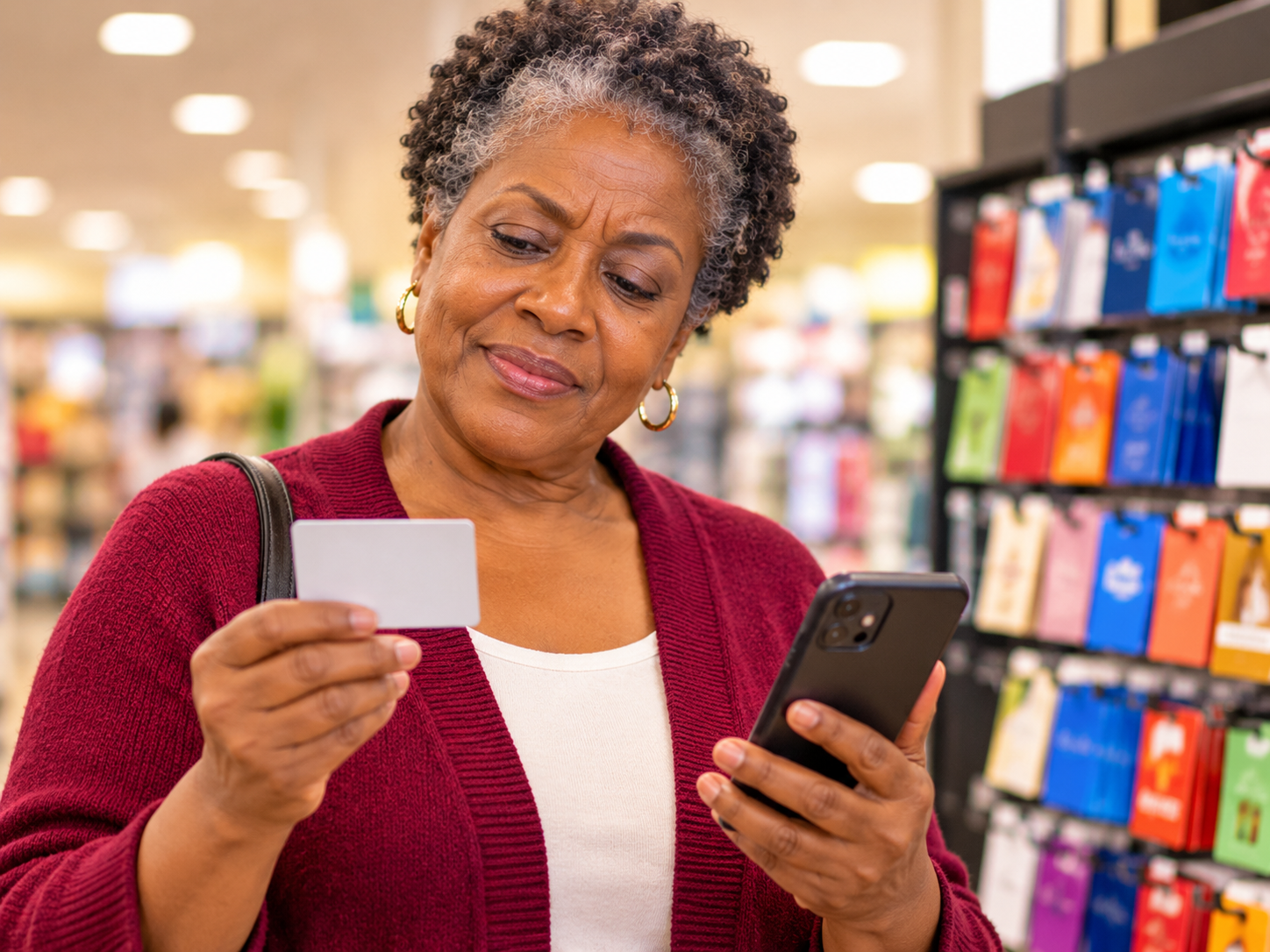
There’s one sentence that can protect you from a huge number of scams: no real business, government agency or family emergency will ever require you to pay with gift cards. If someone who contacted you asks for them, it’s a scam. Always. Yet gift cards remain one of the most common ways people lose money, especially around the holidays, when they’re everywhere. Here’s why scammers love them, the stories to watch for, and what to do if you’ve already paid.
Why Scammers Love Gift Cards
They’re instant. The scammer only needs the numbers on the back of the card, and can spend the money in minutes.
They’re hard to trace. Unlike a bank transfer, there’s no name attached.
They’re very hard to get back once the money is spent.
Anyone can buy them, and they’re sold in almost every store.
The Stories They Tell
The pop-up warning. “Your computer has a virus. Pay for a fix with gift cards.”
The tax or Social Security call. “You owe money and will be arrested unless you pay today.”
The utility shutoff. “Your power will be cut in an hour unless you pay now.”
The grandchild in trouble. “I’m in jail and need bail money. Please don’t tell Mom.”
The online friend. Someone you’ve met online has an “emergency” and needs help.
The prize or sweepstakes. “You won, but you must pay fees first.”
The email from your “boss” or a “friend.” It asks you to buy cards quickly and send the numbers.
The fake job. An “employer” sends you a check and tells you to buy cards with some of it.
In every one of these, the request for gift cards is the giveaway.
What To Do If Someone Asks
Stop. Don’t buy the cards.
Don’t read the numbers or PIN to anyone, and don’t send photos of the card.
Hang up or stop replying.
Tell a family member or friend.
Tell the cashier if you’re already in the store. Store staff are trained to spot this, and they would rather help you than see you lose money.
If You Already Paid
Act as fast as you can, because speed makes a real difference.
Contact the gift card company right away. The customer service number is on the back of the card. Tell them it was used in a scam, and give them the card number and the receipt. Ask whether the money can be frozen. In some cases, it can be, if the scammer hasn’t spent it yet.
Keep the card and the receipt.
Contact the store where you bought it.
Report it at reportfraud.ftc.gov.
Watch for follow-up scams. Anyone who offers to get your money back for a fee is another scammer.
Please don’t be ashamed. These scams are built to fool smart people.
Recovery isn’t guaranteed, but reporting helps, and it helps protect other people.
Buying Gift Cards Safely as Gifts
Gift cards are a perfectly good present. A few habits keep them safe:
Buy from a trusted store, or directly from the retailer’s own website.
Check the packaging. If it looks opened, torn or taped, or the PIN area is scratched or has a sticker over it, choose a different card.
Keep the receipt until the card has been used.
Be careful with discounted cards sold on auction or marketplace sites. They may be fake or already used.
Give them to people you know, and tell them to use the card soon and check the balance.
Scammers sometimes copy the numbers from cards on store racks and then drain them once someone buys and loads them, so checking the packaging matters.
A Rule Worth Sharing
Talk to your family and friends about this one sentence: “Anyone who asks me to pay with gift cards is a scammer.” It takes five seconds, and it can protect people you love.
If you’d like to talk through a message or call that worries you, a Kendera Global session is a calm, judgment-free place to do it.
